
Every year in January I get the urge of starting my vegetable seeds indoors for the new growing season. It’s the light that starts to come back (slowly but noticeably here in Sweden). It’s the hopes and dreams of a beautiful vegetable and flower garden, a whole new growing season that I can do all the right things. No pests, no dying plants, everything grows beautifully and is giving us a rich harvest in the fall.
So in January, I usually start my first seeds indoors.
Why starting seeds indoors
If you live in a colder climate as I am, you need to start your seeds indoors. You need to do so in order to get a harvest during the growing season. Some vegetables have a long developing time, so they need to be started early for them to set fruits. The frost date for my area is May 11th for 50% of chance of frost and May 21st for a 90% chance of not having a frost. This means that warm loving vegetables and flowers should not be planted outside before somewhere between May 11th and May 21st. Knowing exactly when to plant your seedlings outside is not an exact science. Every year is different and every growing season has its’ own challenges.
The reason for starting your seeds indoors is therefore to be able to grow some vegetables and flowers that couldn’t be sown directly in the ground.
When to start seeds indoors
So, when is the best time to start your seeds indoors? Well it all depends on how many seeds you want to start, how much space you have indoors for your future seedlings, how long the developing time for those seeds is and of course your time. For me, it’s also a matter of what worked during the previous season, if I want to try some new seeds and if I think I’ll have the place for all the seedlings during the spring. Because remember, it’s easy to grow the tiny plants that have just sprouted, but one month down the road, the window sill could get too small for all the re-potted seedlings. If you grow your seedlings under a grow light (which is strongly recommended if you start your seeds indoors early) that space could also define your growing space.
So, back to the primary question, when to start seeds indoors? Depending on your growing season and your location this could be as early as January, but it could also be as late as March.
Based on my location, I like to start the first seeds sometimes in January.
Soil management
What kind of soil should you use for starting your seeds indoors? I usually use regular potting soils, but there are some benefits of making your own seed starting mix. I’m not always doing that but sometimes I do. A seed starting mix is a mix of compost and perlite/vermiculite/sand which makes the soils less compact. This is a good thing because the tiny roots of the seedlings could be smothered by the heavy compost. Your precious seedling could collapse. The smaller seeds you sow, the more important it becomes to use a seed starting soil. Larger seeds, like bell peppers, tomatoes, beans and so on are not as sensitive to the soil. Those seeds can be sown in a regular potting soil.
Here is the recipe if you want to use your own seed starting mix:
- one part of compost
- one part of perlite/vermiculite/sand
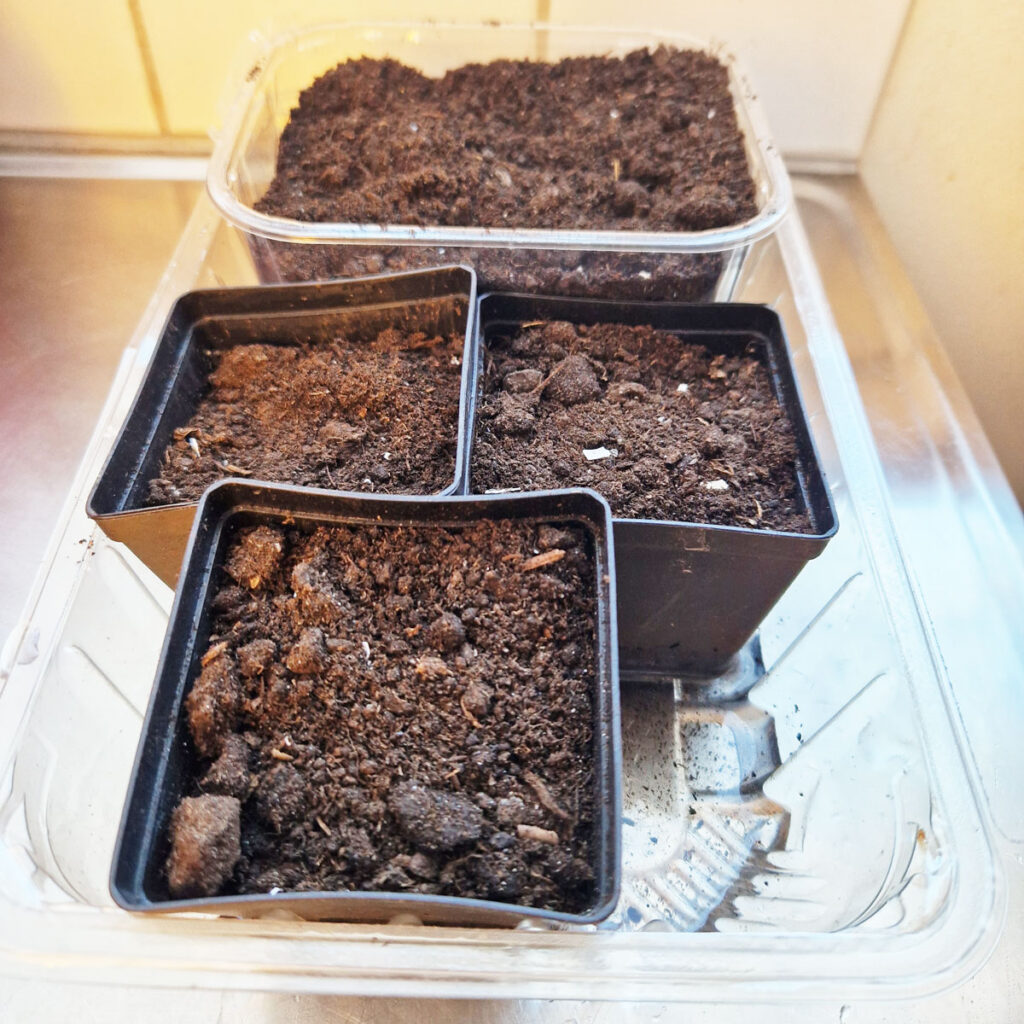
Starting seeds indoors – seed types
Some seeds need light to sprout, other seeds need dark while other don’t really care if it’s dark or light. When you buy seeds, it tells you on the package if the seeds should be covered or not. It also tells you how much compost you should cover your seeds with. Usually, you won’t need much compost on top of your seeds. Look at the size of the seed and cover it with a layer of compost of a size that is about 1-3 times the size of the seed.
Light sprouting seeds should not be covered at all, but you could cover them with a thin layer of vermiculite which is a type of naturally occurring mineral that is used for potting mixes. When used on top of your seeds, it will keep the moisture in while allowing the light to pass through, reaching the seeds that need the light to sprout.
Broadcast sowing
There are a lot of sowing techniques that work when you want to start seeds indoors. I go with the broadcast method, which means I just spread the seeds on the surface of the compost. This means I’m going to be able to start a lot of seeds in a small space and choose the strongest seedlings to re-pot later. This is a space efficient method, but it’s also a good method for seedlings sensitive to too much moisture. That means the seedlings help each other to absorb the moisture.
The other benefits of starting seeds indoors by using the broadcast method is space efficiency. If you use module trays, which is one of the alternatives to the broadcast method and some of the seeds don’t sprout, the module trays will have empty gaps here and there. This could be a problem if your space is limited.
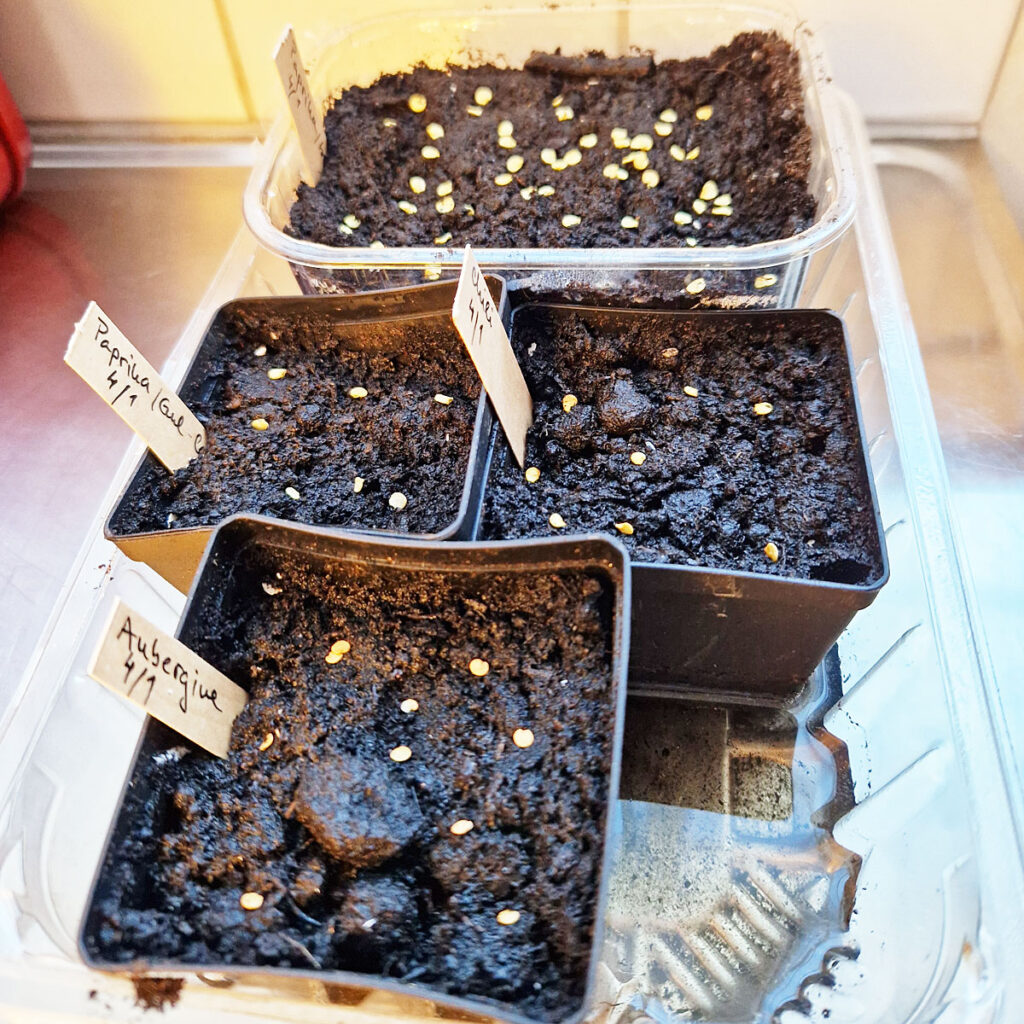
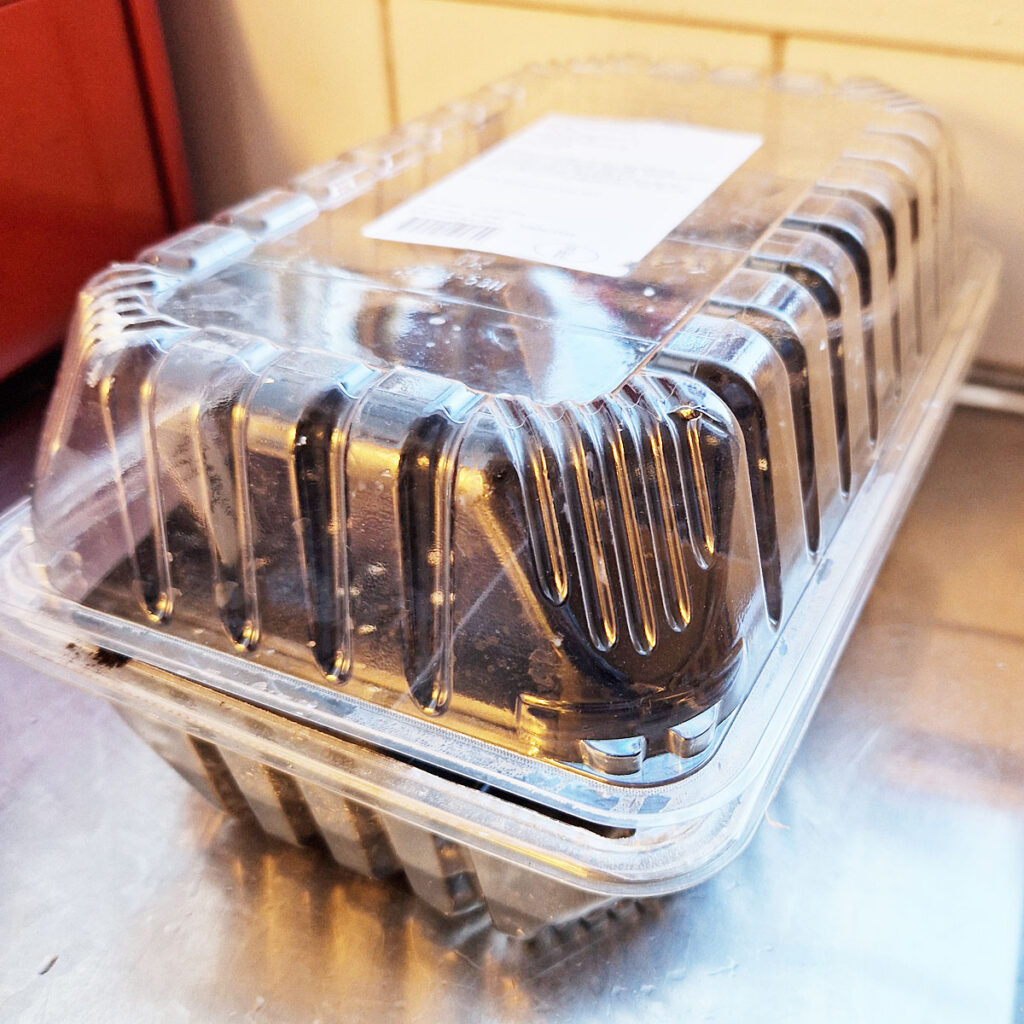
Seeds need moisture to sprout so you need to keep the moisture high around the seeds. This can be done by adding a thin layer of vermiculite on top of your seeds, or cover the pots with a plastic cover. This could be a plastic bag or a clear box. Here I’m using a container that I’ve placed on top of the seeds.
If you are watering your seedlings from the boottom, make sure to remove all excess water from the trays after half an hour.
Name your pots
Remember to name your pots with tags. I also like to write down the date when I sow the seeds on the tag. That way I know when to expect the seeds to be sprouting.
Grow light
Starting seeds indoors in January is a challenge when it comes to light. If you want to start your seed as early as January you need some grow lights for your seeds. If you don’t use grow light the seedling will be leggy. In order to get robust seedlings you need grow lights. This could be as easy as putting a regular light bulb above your seedlings or buying grow lights. Place the light as close to the seedlings as possible. You could rise the light up when the seedlings start to grow higher.
Something like this could work wonders for your seedlings. Make sure to keep the light on for 12-16 hours.
Starting seeds indoors – which ones to start
If you want to know which type of seeds to start indoors, you need to look at their developing time and the growing season in the area you are living in. Where I live, in January-February, it’s recommended to start seeds like
- Bell peppers
- Chili peppers
- Aubergines
- Onion seeds (not sets)
- Leek
- Artichoke
- Strawberries
During March it’s recommended to start seeds like:
- Tomatoes
- Cabbage
- Cauliflower
- Broccoli
- Corn
April is the best time to starting seeds indoors for vegetables that are very sensitive to cold and that grow very fast. The most common vegetables you could sow in April are:
- Cucumbers
- Squashes
- Pumpkins
- Watermelons
- Honeydew melons
Pests management – Fungus Gnat
The most common pest associated with started seeds indoors is Fungus Gnat. The small flies lay eggs in the soil and the larvae eats the roots of the small seedlings. There are lots of tips and hacks for eradicating fungus gnats from the pots and a lot of them work to an extent. Some of the solutions involve putting sticky yellow cards next to the seedlings or using vinegar traps.
A quick recipe for vinegar traps is mixing one cup of water with a table spoon of vinegar, half a teaspoon of honey and a few drops of liquid dishwasher. Place the mixture in a bowl next to your seedlings. I usually have a vinegar trap placed on every shelf where I have seedlings or plants.
What I’m trying this year is watering the soil before I sow the seeds with cooking water. This gets rid of the larvae and the eggs of the fungus gnats that are on top of the starting mix. Let the soil cool down for an hour or so before sowing your seeds.
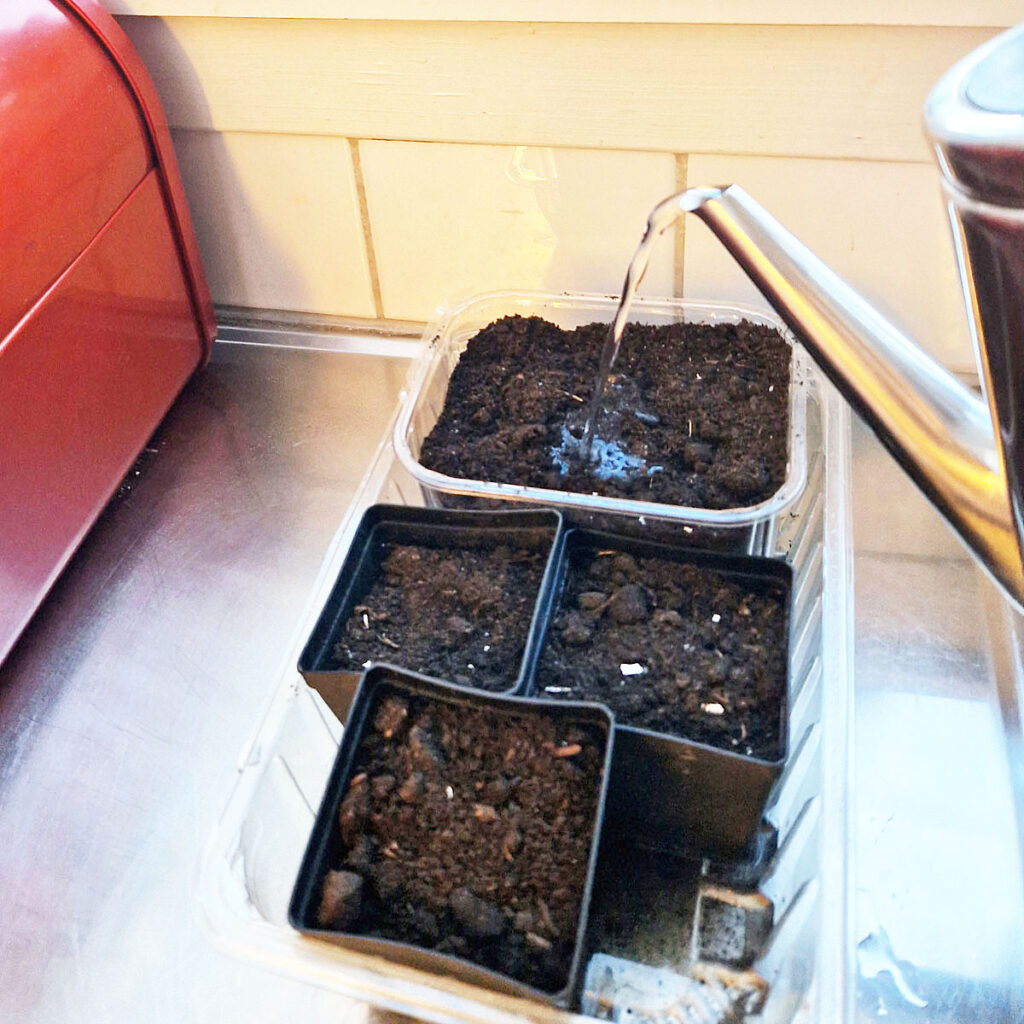
It’s also good to place the pots in a place that is free from other fungus gnats, if possible.
The step by step guide
The process of starting your seeds indoors could be
- Choose the proper seeds
- Fill your pots with potting mix
- Water the potting mix
- Water the potting mix with really hot cooking water
- Let the soil cool down
- Place the seeds on the surface of the soil
- Cover the seeds that need to be covered with compost, otherwise let the seeds be uncovered or covered with a thin layer of vermiculite
- Place a name tag in the pot
- Drain any excess water from underneath your pots
- Cover the pots with a plastic cover of any kind to keep the moisture in
- Place the pots under growing light, alternatively on the window sill
- Wait for the seeds to sprout
Sprouting
After as little as a couple of days or as long as a couple of weeks your seeds will start to sprout. Every vegetable and flower sort will have its’ own sprouting time. In the picture below I have sown bell peppers in two pots, chili and aubergines in the other two. The bell pepper seeds sown in the bigger container were seeds that I’ve saved myself from store-bought bell peppers. The rest of the seeds were bought from an online store. All the seeds were sown at the same time. The sprouting difference in the bell peppers could be because the seeds that I’ve saved from the store bought peppers are much fresher. The picture is taken eight days after I’ve sown the seeds.

Should you save seeds from vegetables that you buy from the store? Well, the experts say no, because you never know what sort you get. I personally do so, because I like the excitement to see what I get. If I’m happy with the results, I always save the seeds so I can further propagate the properties of that particular plant.
Final words
It’s always so exciting to start a new growing season. Make sure to not sow too many seeds and get overwhelmed down the road. If you do sow more than you need, you can always pass the seedling that you don’t need to a friend.
Have fun and good luck with your seedlings.
