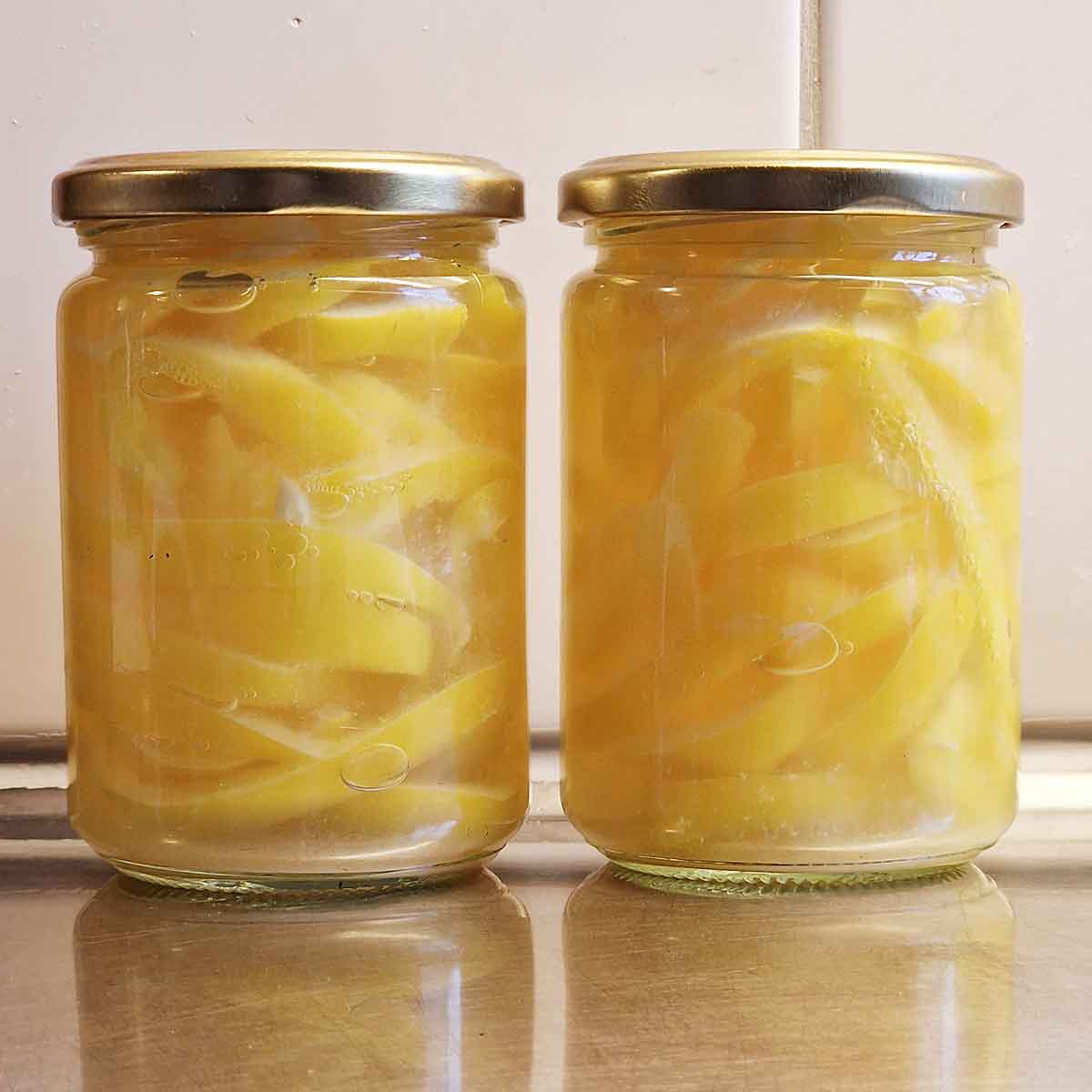
One of my favorite thing to do all year round is fermenting bell peppers. As a side to most steaks or an add-on to certain salad blends, even my toddler loves it. This is a huge win for me, because she usually is picky about most foods.
What is the purpose of fermenting peppers?
Fermenting peppers and vegetables in general was a way of preserving food for the winter, when peppers wouldn’t grow and produce peppers. Things have changed and you can buy peppers all year round at the store nowadays. So why do it now? If you have grown up eating fermented food as I have, you just crave it from time to time. The fermenting process changes the taste and flavor of the peppers making them tangy.
The fermented peppers and all the fermented vegetables are also said to contain lots of probiotics therefore being good for the body.
Are fermented bell peppers good?
The answer to this question is definitely yes. The bell peppers taste good, can be preserved for a long time and because they contain probiotics, they are good for your gut.
What is the difference between pickled and fermented peppers?
The pickled and the fermented peppers use two different brines. For the pickled peppers you need some kind of acidic brine. That acidic brine give the peppers the sour taste. The fermented peppers use just water and salt for the brine. After the fermented process the peppers get their specific tangy, sour taste.
Do fermented peppers taste like pickled peppers?
The simple answer to this question is No. The fermented peppers have a very specific taste, a little tangy, a little savory. The pickled peppers taste a lot like vinegar.
What you need for fermenting peppers
This is what you need to ferment bell peppers
- Tap water
- Salt. You should get a salt that doesn’t have iodine added to the mix.
- Bell peppers. It doesn’t matter what kind of bell peppers you get. You can ferment the green ones, the yellow and the red ones. My daughter’s favorites are the red ones, but I thing it’s mostly because she likes the red color. Remember though that the bell peppers with thinner walls store for a shorter time than the regular ones. They also ferment quicker.
- Clean jars. Sterilize the jars and the lids by putting them in the oven for 15min at a temperature of 150 degrees Celsius or 300 degrees Fahrenheit
- Fermentation Weights. This is not mandatory but it definitely helps the peppers stay under the brine water during the fermentation process. You can get them from here if you want to try it.
What is the ratio of salt to water for fermenting peppers?
The salt to water ration for fermenting vegetables in general is about 4%. This means that if you weigh your ingredients, for one kg brine water you’ll need to mix 40g of salt with 960g of water. I usually cook my water before I mix it with the salt. I then let the brine water cool down before I add it to the peppers.
How to ferment bell peppers
- Start by choosing your favorite bell peppers to ferment
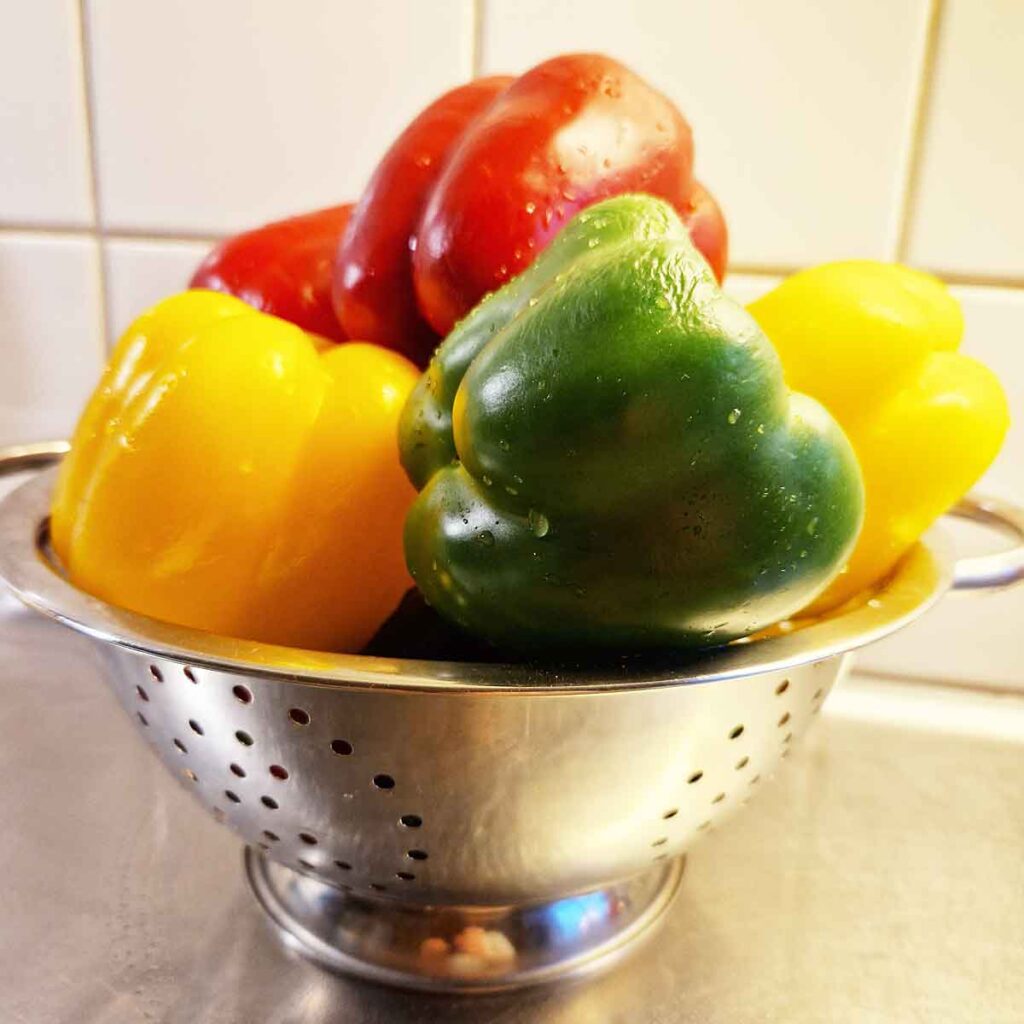
- Make your brine water by mixing 4% salt (without iodine) into hot water. This means that for 1kg of brine water, you should mix 40g of salt into a 960g of hot water. Let the brine water cool down to room temperature.
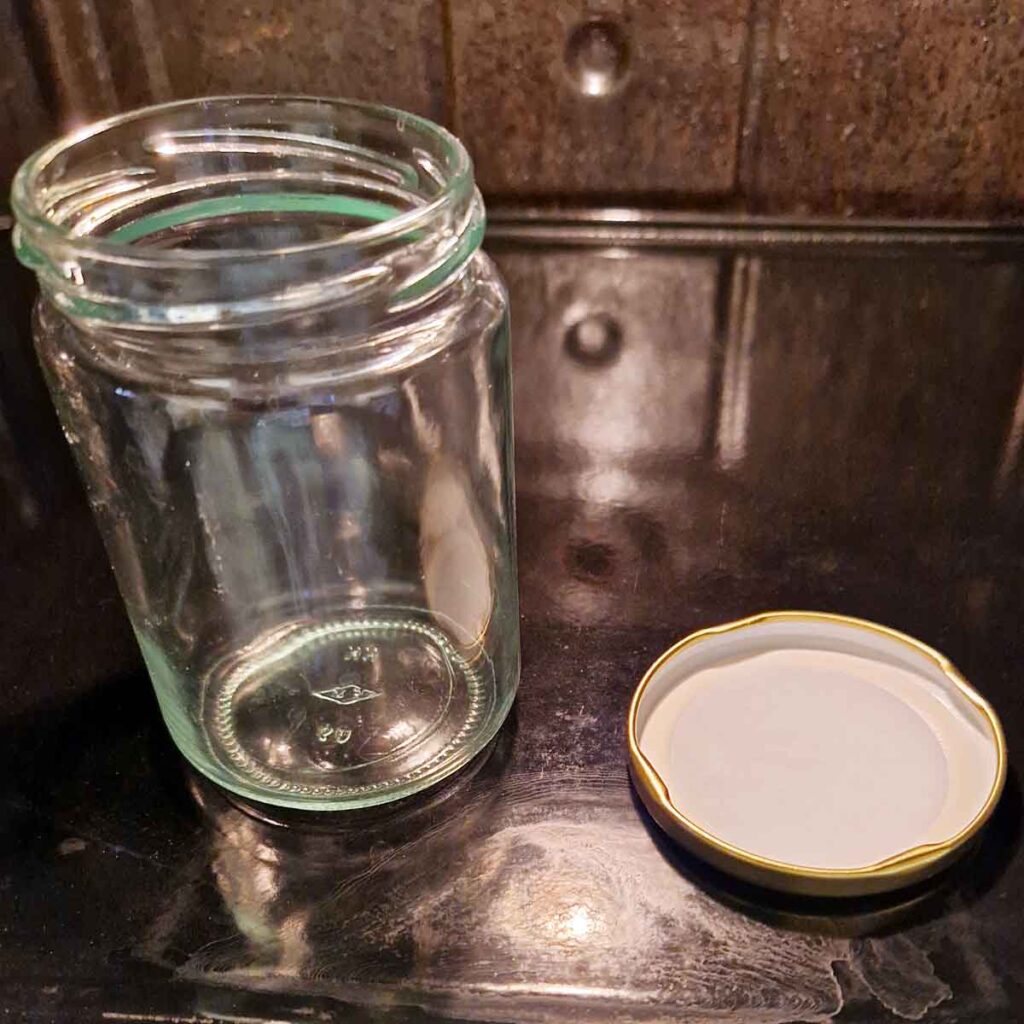
- Sterilize your jars and lids by placing them into the oven at 150 degrees Celsius or 300 degrees Fahrenheit. Keep them inside the oven for about 15 minutes.
- Wash and slice the bell peppers into desired shapes.

- Fill the jars with the sliced bell peppers. Make sure to leave some space above the peppers.
- If you use fermentation weights, place them on top of the peppers
- Pour the brine on top of the peppers.
- Place the lid on the jars and keep them at room temperature until they are ready to eat. The time is decided by your room temperature.
How long should you ferment bell peppers
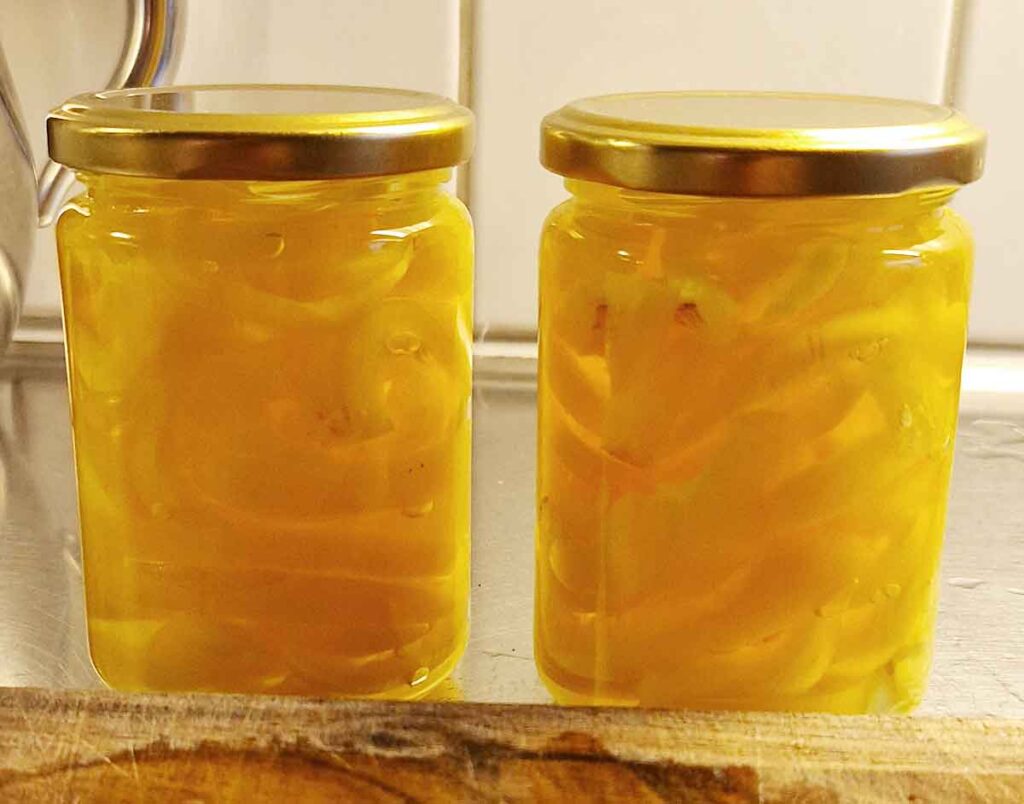
The time you need to ferment the bell peppers can vary due to the temperature conditions in your room. I usually keep my jars with fermenting peppers in our kitchen where it is very warm, so for my peppers it takes about 5 days to ferment.
If you keep the jars in a cooler room it could take up to 5 weeks for them to be finished.
How do I know when my fermented bell peppers are done?
The bell peppers change colors and structure once they have fermented, so you can just look at them first. Once you suspect they are finished, you need to open one of the jars and taste them. You could start tasting one on day five and if it tastes tangy they are done. If they aren’t ready, put the lid back on and let them ferment a little more.
Make sure to use a clean fork when you pick bell peppers from the jars.
First time you ferment bell peppers it could be a little bit of a trial and error with the fermentation time. Try them twice a week if they aren’t ready on day five and you should catch the perfect fermentation time. Write it down so you know in the future how much time they needed in your conditions.
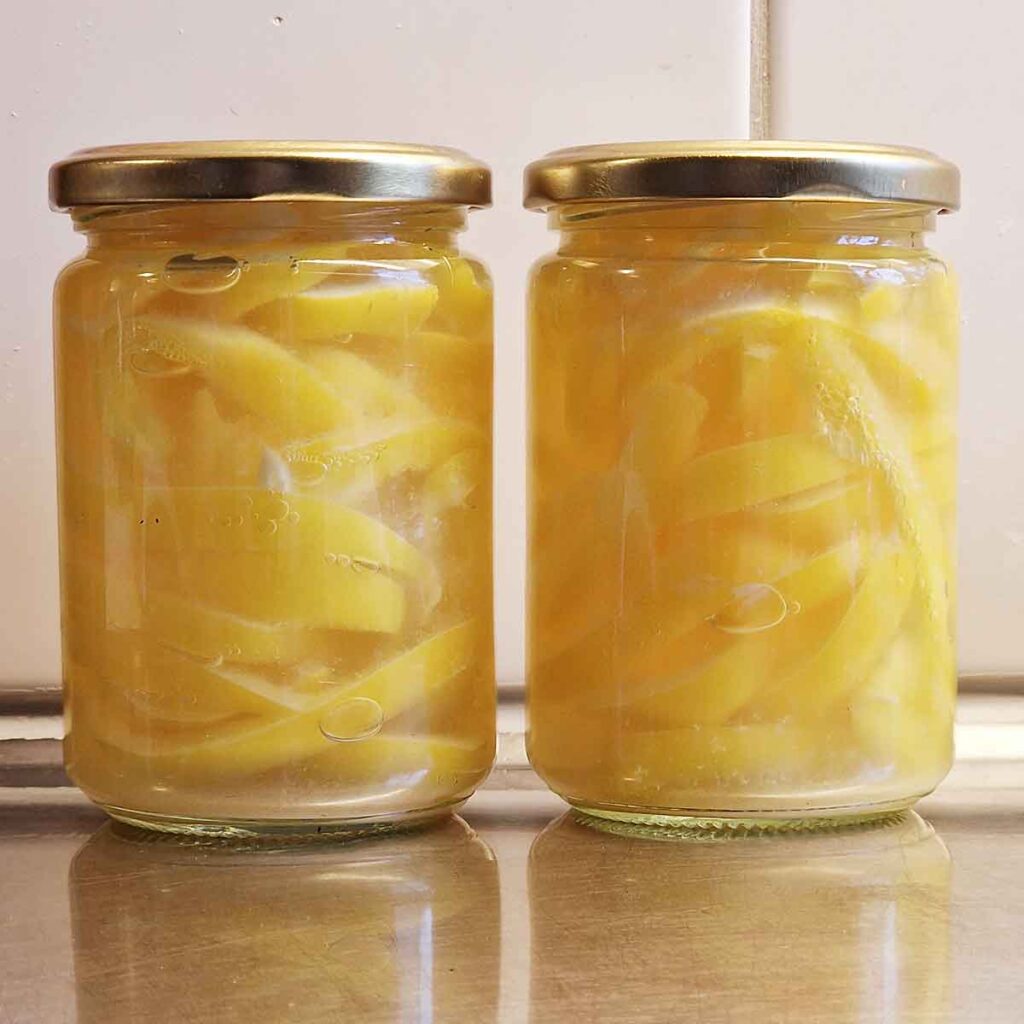
Why are my fermented bell peppers mushy?
The longer you keep your fermented peppers, the mushier the peppers will get. The process of fermentation continues even in cold conditions, even if the process is much, much slower.
If you happen to over-ferment your peppers at room temperatures, they can also get mushy.
Another cause to mushy peppers is that you’ve used peppers that had thin walls. The thinner the walls, the faster the fermentation goes. This means that it’s harder to catch just the right fermentation point. This also means that the fermented peppers will over-ferment quicker.
The peppers with thicker walls will store for a longer time.
Should I stir my fermenting peppers?
You can definitely stir or shake your fermenting peppers. This will help with the fermentation. Use a clean spoon or fork to keep the contamination away.
However, you don’t have to do that, or do it that so often. Usually, after I’ve filled the jars with peppers and brine water, I don’t stir them at all. But my fermentation process goes very quickly because of my higher room temperature. You would probably need to stir your peppers more often if you keep them cooler than I do.
What is the white stuff floating in fermenting peppers?
If you happen to get some white stuff floating on top of the fermenting peppers, you’ve probably got some contamination going in your jars. The white stuff is a yeast that isn’t harmful unless it gets moldy. Usually when that happens the liquid in the jar starts to get cloudy. You have two choices here;
- You can use that jar right away. Remove the peppers from the jar and keep them in another jar without the brine during that time.
- If you have a larger jar, you want to preserve it for a longer time. In that case you can replace the brine with a new one. I usually use the same type of brine but I’ve seen people using a less salty brine, like 3% brine instead of the 4% that is used to ferment peppers.
How do I store my fermented bell peppers?
Once the peppers are fermented you need to stop the fermenting process. You can do that by placing them in a cool space like a fridge or a root cellar. The fermented bell peppers store for months in these cold (but not freezing) conditions.
Good luck at fermenting your bell peppers and make sure to check my other food preservation guides.